SkiCortina guide
Ski rental in Cortina d'Ampezzo
What to rent in Cortina, how a boot should fit, and why most people should not fly with skis.
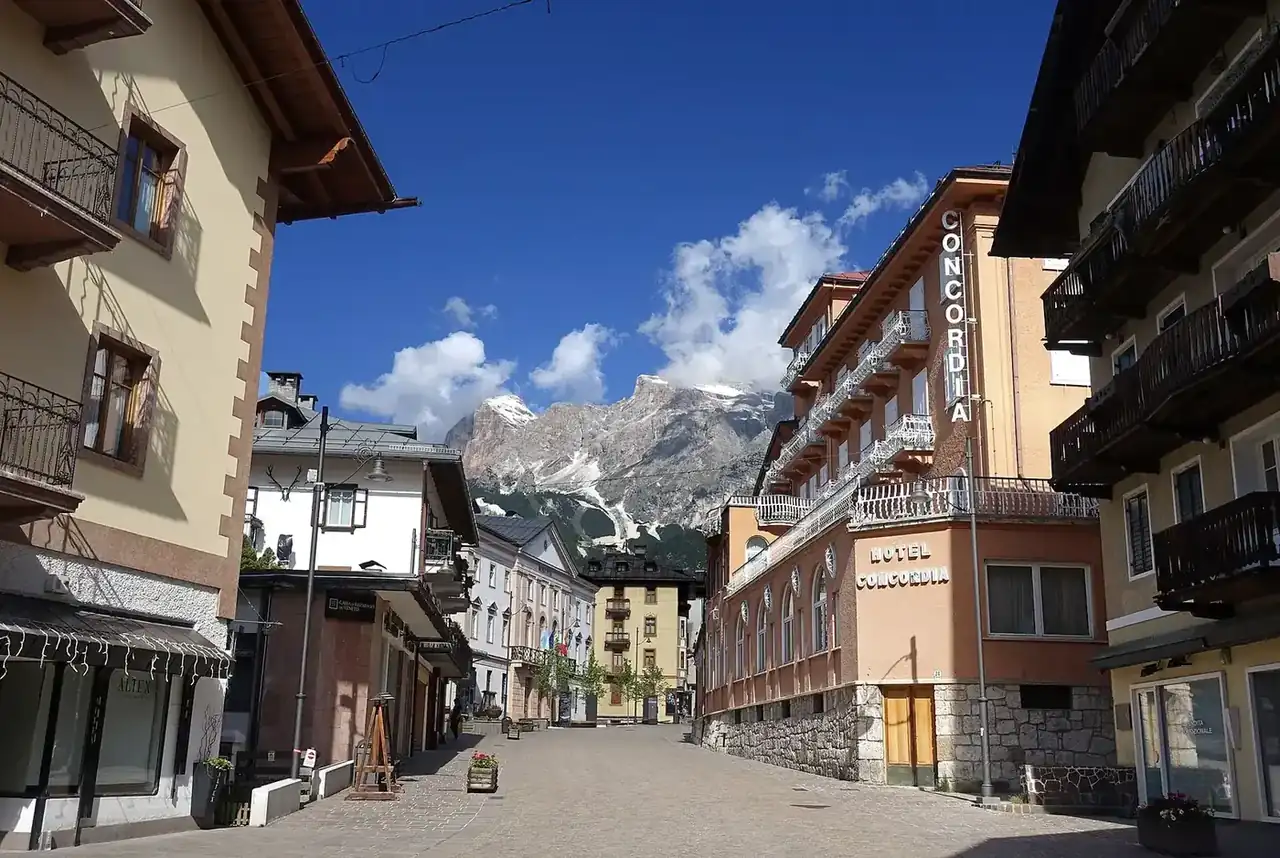
Tiia Monto, Wikimedia Commons, CC BY-SA 3.0

On this page

Rent the skis in Cortina. Rent the boots in Cortina unless a boot fitter at home has already built a pair around your feet and you are willing to carry them. This is the whole rental policy, and the rest is detail. The town has shops in the centre and desks at the lift stations. Names and stock rotate. The visitor office on Corso Italia 81 can point you at a desk that is open this week. What does not rotate is the fitting problem: a bad boot ruins the Dolomites faster than bad weather does.
What to rent, and what to bring
Skis for a week on the Tofane, Faloria, and Cinque Torri should come from a shop that will ask what you ski at home and then watch you exaggerate. Be specific. “I ski blue runs and the occasional red, and I have not skied since last March” is a useful sentence. “I ski everything” produces a ski that punishes you on Socrepes. Beginners want the shop’s easy pair, not last year’s race stock. Intermediates want something that will hold on the Olympia side without feeling like a plank on Faloria’s gentler runs. If the snow is spring-soft in March, a slightly wider ski from the same shop is a fair request. You can swap during the week if the shop is a decent one. Ask about the swap before you pay, not after you hate Tuesday.
Boots are the purchase you should not gamble if you ski more than a week a year. If you own them, travel in them or in a boot bag, and rent only the skis. The gear page includes a boot bag for that case, and it tells everyone else to skip it. If you do not own them, the rental boot is your most important hour in town. Stand in the shell with the liner out if the fitter offers, or at least stand, flex, and walk. Toes should brush the front when you stand upright and pull back when you flex the ankle. The heel stays down. The cuff closes on the shin without a gap you can slide a hand through. Buckles should reach a secure notch with some travel left, not the last millimetre of the ladder. Pain over the instep in the shop will be a different pain on the third chairlift. Say so while you are still in socks on their carpet.
Children rent everything except, if you already own it, the helmet. Their feet change size between seasons and sometimes between December and March. A boot that was “fine at Christmas” can be a misery in February. Budget a refit if the trip is long. Put the child’s name in the helmet and on the gloves. The school does not provide the kit. Its course notes say rental, pass, and insurance sit with the client. A family that discovers this at the Socrepes office has a worse morning than a family that rented on Sunday.
Poles are a rental-desk item. Helmets are a rental-desk item too, and they are mandatory. Try the helmet with the goggles you intend to wear. A gap that dumps wind onto your eyes is a bad fit even if the shell is certified. If you wear glasses, bring them to the shop and test the goggles there, or bring the over-glasses pair from the gear list. Do not assume the cheapest rental goggle will fit over a frame.
When to book the shop
Walk-in rental works in a quiet January week and fails during Christmas, New Year, and the February school holidays. Those are the weeks the calendar tells you to book everything else, and the shop is part of everything else. Reserve the afternoon before the first ski day so the morning is for the lift, not for a queue behind a team that arrived together. If the first ski day is a beginner course, the reservation is not optional. The instructor will not wait while you discover your size is gone.
Ask the shop where to collect if you are staying near Socrepes and the skis are in the centre, or the other way around. Some desks have a slope-side pickup and a town workshop. A ten-minute misunderstanding is a missed gondola. Also ask about overnight storage. Carrying skis back to a third-floor walk-up is the tax you pay for a charming centre room. A shop that holds them overnight is the discount on that tax.
Prices are on the shop’s current sheet. They are not on this page, because a printed number would be stale before the season’s second snowfall. A package that looks cheap and hands you a boot in the wrong shell size is the expensive one. Pay for the fitting time.
Insurance, damage, and the end of the day
The pass does not insure you, and the rental contract is a second conversation. Read the damage waiver before you sign it. A ski that releases in a fall is doing its job. A ski that meets a rock because you left a piste closed for thin cover is a bill. Cortina’s edges, especially early and late in the season, are where “just one more run” finds grass. Stay on open pistes. The live lift board is also, indirectly, a cover map. A lift that is shut is often shut because what is under it should not be skied.
Return the kit at the hour you agreed. Sunday coaches do not wait for a shop queue. If you are leaving on an early bus, return the equipment on Saturday evening and walk to the coach with bags only. The weekend plan is built around that idea.
Bring your own socks, gloves, base layer, and, if you can, helmet and goggles. Rent the heavy, fitted, local things. That split survives a flight, a bus, and a week of Dolomite weather better than a ski bag that barely made the connection at Mestre.
Questions people actually ask
Should I bring my own skis?
Bring boots if they are already fitted to your feet and you trust them. Rent the skis in Cortina. Flying with skis is worth it for a long trip or a very particular pair. For a week on Cortina's mixed mountains, a shop at the lift can hand you a length that matches the snow that week. Children should rent. They grow, and so do their boots.
Are rentals inside the ski school price?
No. Scuola Sci Cortina states that equipment rental, the lift pass, and insurance are the client's cost. Book the shop for the afternoon before a morning class, especially at Christmas and in February. A lesson that starts with a queue for boots is a shorter lesson.
Is a rental helmet legal?
A helmet is mandatory, and a rented one counts if it fits and is fastened. From the 2025/26 season the rule covers every age and covers skiing, snowboarding, telemark, freestyle, and tobogganing. If the shop is out of your size, you still may not ski without one. That is the argument for bringing a helmet you already own.
Sources checked
Updated 15 November 2026. Official pages win if a detail here and a live lift board disagree.